
Ohio’s Holly Act: Closing the Low Bail Revolving Door

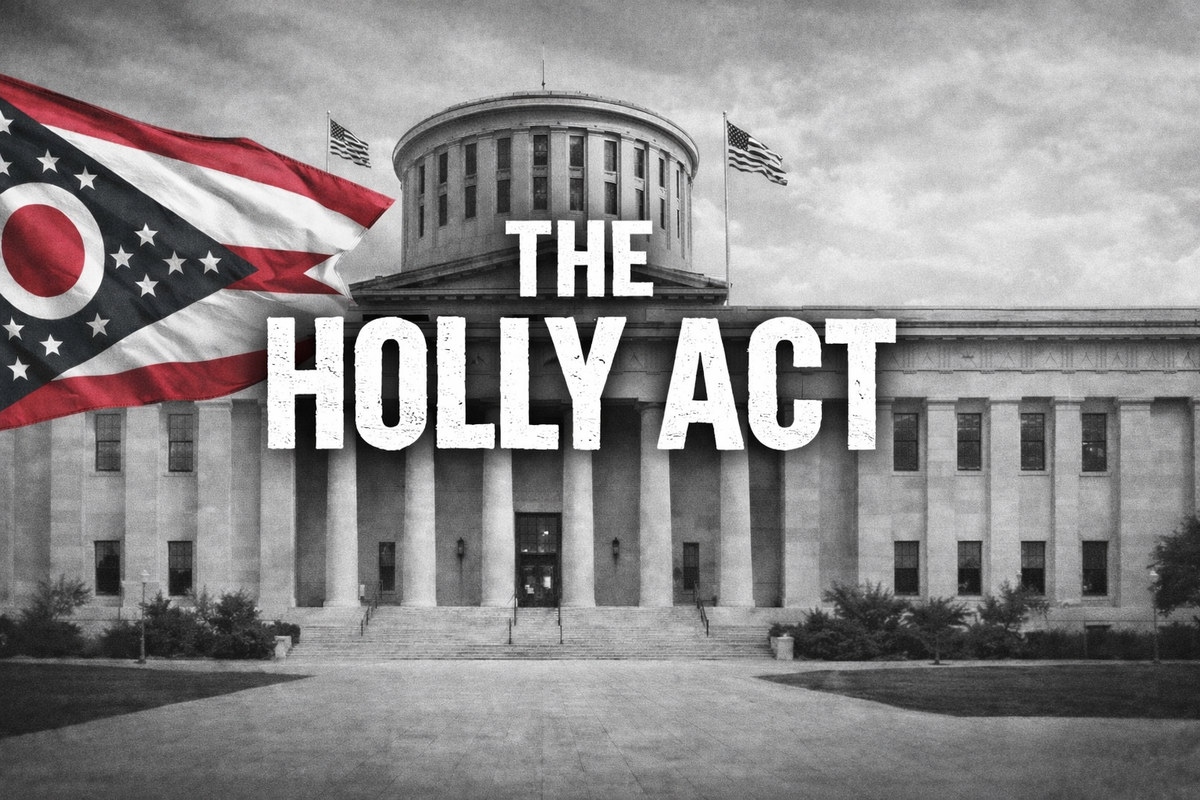
How Ohio’s proposed Holly Act aims to address repeat failures to appear and the low-bail revolving door.
Last summer, a violent street brawl in downtown Cincinnati drew national attention after video of the incident spread widely online. Several people were injured, including Holly, an innocent bystander who was knocked unconscious during the attack.
In the months since, Holly has spoken publicly about the lasting impact of that night. What also caught public attention was something many people learned afterward: one of the individuals accused of organizing the fight had already been under indictment in another case and was back on the street after posting only a very small bond.
Situations like this inevitably raise difficult questions about how the pretrial system is functioning. Bail exists to balance two fundamental principles — the presumption of innocence and the need to ensure that defendants appear in court and comply with the law while their cases are pending.
But when bonds are set so low that they provide little real incentive to return to court, the system begins to resemble a revolving door — where defendants move in and out of custody without meaningful accountability. Cases like Holly’s remind us that those policy decisions can have real-world consequences.
Ohio lawmakers are now considering House Bill 741, known as the “Holly Act,” which attempts to address some of those gaps while preserving access to bail and judicial discretion.
One of the bill’s most significant provisions deals with repeat failures to appear in court. Under current law, individuals who repeatedly ignore court dates can still be released on personal recognizance or minimal cash deposits. The Holly Act would limit those options for defendants who have demonstrated a pattern of failing to appear, requiring more meaningful financial accountability when someone repeatedly disregards court orders.
The legislation also addresses the growing role of charitable bail organizations.
In recent years, nonprofit bail funds have expanded in a number of states, posting bail for defendants using donated and crowd-sourced funds. While many of these efforts are framed as criminal justice reform, charitable bail organizations often operate outside the licensing requirements, financial responsibility, and regulatory oversight that apply to professional bail agents and surety companies.
The Holly Act introduces transparency and accountability in this area by limiting the circumstances under which charitable organizations can post bail and requiring public reporting about how those funds are being used.
The goal is not to eliminate charitable involvement in the bail process, but to ensure that anyone posting bail in Ohio operates within a framework that promotes accountability and public confidence.
Another important element of the bill involves the role of responsibility in the bail system.
Licensed bail agents operate under a structure where financial accountability is built into the process. When a bond is posted, the agent and the surety company become legally responsible for ensuring that the defendant returns to court. If the defendant fails to appear, the bond can be forfeited.
That structure creates a strong incentive to make sure defendants comply with court orders.
The Holly Act reinforces that same principle across the broader pretrial system — particularly when it comes to repeat failures to appear.
Policies surrounding bail may seem technical, but they affect real people and real communities. As Ohio lawmakers consider the Holly Act, the broader goal should remain clear: maintaining a pretrial system that is fair, transparent, and accountable. Passing the Holly Act would be a meaningful step in that direction.