Bail as a Check on Government Power

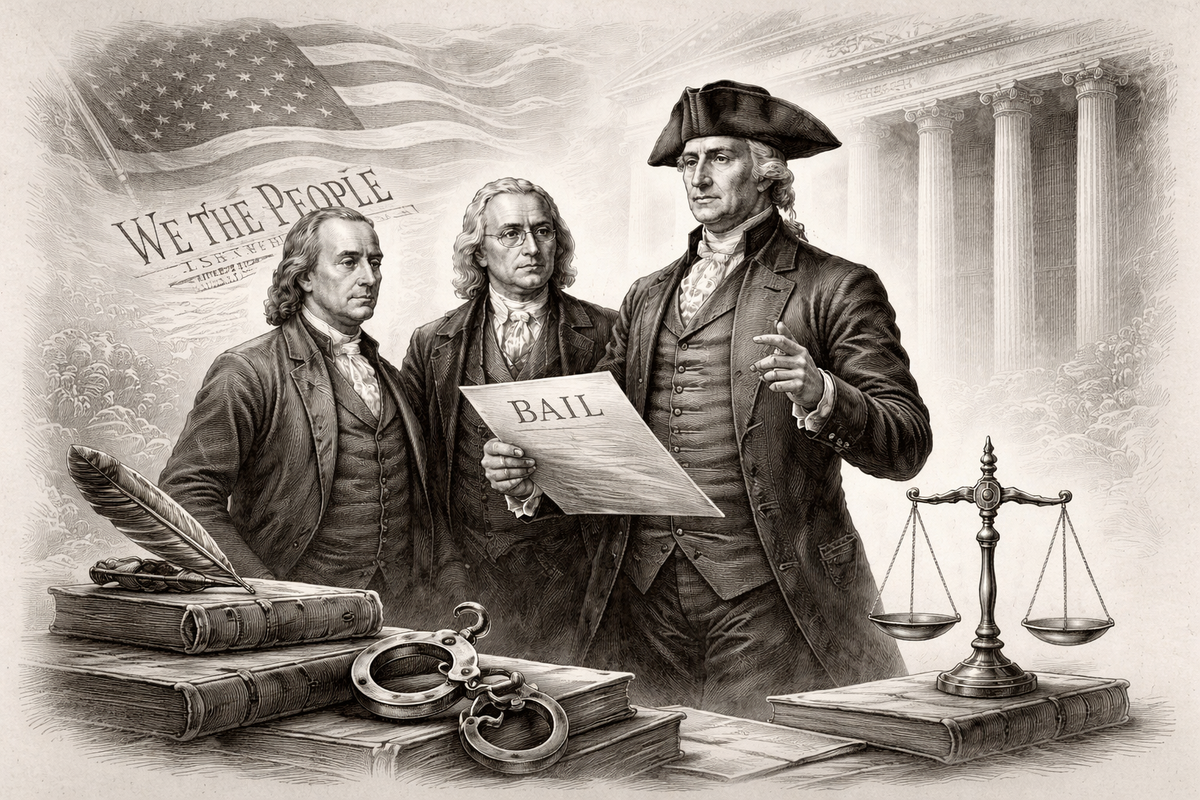
From the earliest days of the republic, America’s founders viewed bail not simply as a procedural step, but as a critical safeguard against unchecked government power.
America’s bail system was not created by accident. It grew out of the Founders’ deep concern about unchecked government power and the risk that authorities could imprison people before trial without meaningful safeguards. Drawing from English legal traditions and colonial experience, early American leaders viewed bail as a critical protection of liberty — ensuring that people accused of crimes could remain free while awaiting trial unless there was a compelling reason to detain them.
The principle behind bail was straightforward: the government must prove its case, and individuals should not lose their freedom based solely on accusation. By requiring a financial guarantee tied to a court appearance, bail created accountability while preserving the presumption of innocence. In this way, it functioned as a structural check on government authority, preventing the routine use of pretrial detention as a tool of control.
Over time, debates about bail have continued to evolve, but the original constitutional concern remains the same: balancing public safety with the protection of individual liberty. Understanding the historical roots of bail helps explain why it remains embedded in the American justice system and why many policymakers still view it as an important safeguard against excessive state power.
Credit: Mike Morrison, “Bail and the Founders’ Fear of Unchecked Power.”
Read the full article by Mike Morrison: